Awards season · Directing & Cinematography
'Man in Motion' Doc Reveals 160 Hours of Rick Hansen's Raw Audio Diaries
Director Adrian Buitenhuis got 160 hours of Hansen's candid tour audio diaries and unseen 35mm of the 1987 Vancouver finish. The doc screens at Whistler December 3.
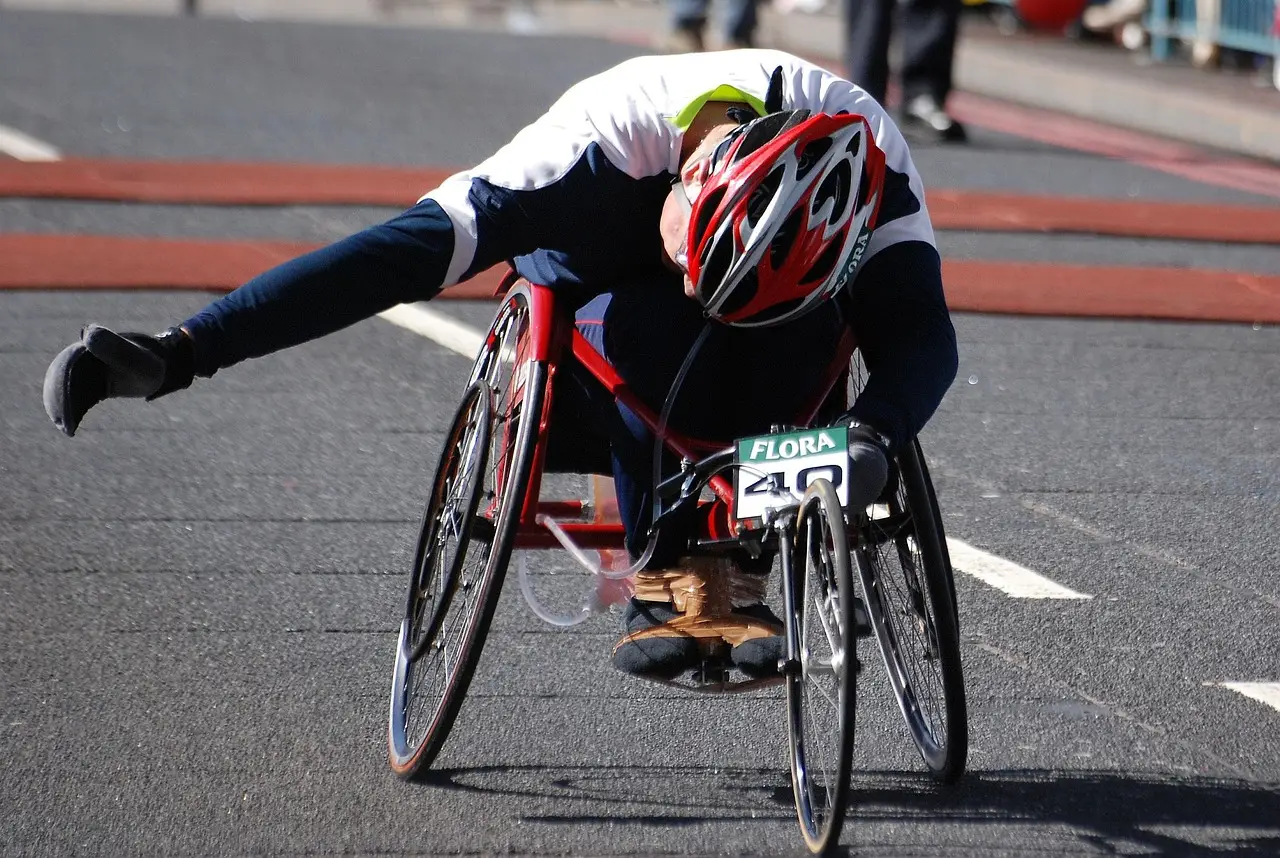
Production notes
- The tour raised $26 million against a $10 million goal, across 34 countries from March 21, 1985 to May 22, 1987.
- Hansen granted access to roughly 160 hours of cassette audio diaries from the tour.
- The film screens at Whistler's Maury Young Arts Centre on December 3 at 5:45 pm after a TIFF premiere in September.
- Producer Derik Murray acquired unseen 35mm homecoming footage from David Foster's collection.
Rick Hansen wanted to quit his own world tour. Summer 1986, Miami, 459 days and 15,748 miles in, the Man in Motion World Tour had $112,000 in its legacy fund against a $10 million goal, and communications with the Vancouver home office had broken down. "I'm getting totally, totally fed up with that office, man," Hansen says on tape. "I'm ready to pack it in—shut the whole operation down. All I want to do is get this thing over with."
That recording comes from roughly 160 hours of cassette audio diaries that Hansen handed to director Adrian Buitenhuis, and it anchors Man in Motion: The Rick Hansen Story, screening at the Whistler Film Festival on December 3, 5:45 pm, at the Maury Young Arts Centre. The film premiered at TIFF in September.
Hansen's condition for access? He wanted to listen first. "I think he got through maybe one tape and was like, 'There's no way I'm going to get through 160 hours of tapes,'" Buitenhuis recalls. "So he handed them over. Once we had those tapes and I heard them—not only what they said, but the tone of them and the quality of them—I was like, 'Oh, this is going to be the spine of the movie.'" Amanda Reid, Hansen's tour physiotherapist and later his wife, lent her own cache of tapes to the production.
What does full access actually buy an editor?
Trust, and restraint from the subject. After watching an initial rough cut, Hansen didn't request another preliminary version; he saw the finished film for the first time at its TIFF premiere. "He got out of the way," Buitenhuis says. "He gave us a lot of trust and just let us do our thing. From the beginning, I told him that I wanted it to be authentic and truthful. The more we get to the core of how hard this was and how close to the edge of falling apart, the more people will realize how big a feat it was." Editors on the film: Sandro Desaulniers, Graham Kew and Freya Maude.
The tour ran March 21, 1985 to May 22, 1987, starting and ending at Vancouver's Oakridge Centre across 34 countries. Momentum returned once Hansen hit Canadian soil, and the tour ultimately raised $26 million — more than double its target — for spinal-cord research.
How the film handles the crew
Buitenhuis kept the interview pool deliberately tight: wheelchair mechanic and equipment manager Don Alder, coach and tour coordinator Tim Frick, tour manager Nancy Thompson and the others who were actually on the road. "Rick said from the very beginning, 'I want to make sure this is about the team as much as it's about me,'" the director says. He wanted the film to feel "like we were with the astronauts going to the moon."
Reid gets particular credit for saving the first phase. "It was the lack of awareness for what he was doing," Buitenhuis says. "Amanda kept pushing him and saying 'It's all gonna change, you have to have faith in this.' He wouldn't have made it out of North America, I don't think."
The archival find
Most of the film runs on lo-fi VHS and four-decade-old news clips. Then the ending changes format: 35mm footage of Hansen's Vancouver homecoming, wheeling past cheering crowds of schoolchildren. Producer Derik Murray acquired the reel from music mogul David Foster's collection. No one had viewed it before — including Hansen.
The production scanned it days before Hansen's interview, cut something together, and screened it to him on camera. Hansen wells up on film; editors actually dialed the emotion back. "He always said 'I was four-and-a-half feet off the ground looking straight forward. I didn't see it from a bird's-eye view,'" Buitenhuis says.
Context, and what's next
Hansen lost the use of his legs in a 1973 road accident at 15. He won 19 wheelchair marathons, three world titles, 15 Paralympic and Pan Am Games medals, and was named Canada's Disabled Athlete of the Year in 1979, 1980 and 1982. Terry Fox was a teammate on the Vancouver Cable Cars basketball squad.
Buitenhuis says the project has redirected his slate: projects on disability and the Paralympics ahead of the L.A. Games, including the 1984 Olympics' role in the Paralympics joining the Olympics in 1988. "There's so many stories about athletes taking the dis- out of disability," he says. "It needs to be shown more."
via Google News · Film Festivals (Source)
More from Amara Osei
Show full bio
Senior reporter covering companies, deals and strategy in Filmmaking News is the working trade daily for at Filmmaking News.
196 articles
Further readings
- CNN Films Acquires Bernie Taupin Doc, Sets January 1 PremiereNovember 22, 2026
- 'You Can See Everything' Crosses $100M Global Box OfficeNovember 22, 2026
- Colonoscopy Lens, Tube Cameras and Eight DVX100Bs: Inside 'Primetime's' Camera CageNovember 20, 2026
- VFX Studios Break Down the Backrooms: 600 Shots, Three ReelsNovember 22, 2026
- 'Backrooms' Built Its $400M Hit on 30,000 Square Feet of Practical SetsNovember 25, 2026