Awards season · Directing & Cinematography
Nocturne Unifies Pennsylvania Woods and Underground Prison Darkness
David Franco joins Pennsylvania woods, stage-built prison cells and one narrow light shaft for Nocturne, whose Apple TV finale airs December 25 after multiple texture tests.
Production notes
- Nocturne episodes stream every Friday, with the finale scheduled for December 25.
- Production designer Judy Rhee and cinematographer David Franco built the solitary-confinement cells on a stage.
- The crew tested multiple cement textures and tones to develop the cell surfaces.
- One small light well admitted a narrow shaft of sunlight into the underground cells.
- Franco previously photographed Stephen Graham on Boardwalk Empire, where Graham played Al Capone.
Apple TV streams a new episode of Nocturne every Friday, and the finale airs December 25. Cinematographer David Franco built the Apple TV thriller around one visual problem: joining Pennsylvania woodland imagery with the near-black environment of a serial killer’s solitary confinement, or isolated detention.
Stephen Graham plays the manipulative, psychopathic killer confined in solitary detention; Liev Schreiber plays the damaged former cop trying to stop him. Franco shot the series in Pittsburgh, where the river, water and surrounding landscape gave him a direct route into the story’s nature motif.
Franco said: “We knew, shooting in Pittsburgh, nature is right there, right? The river, the water…” He treated the characters as closely connected to nature and used the environment to create a deliberate juxtaposition.
One location, two kinds of darkness
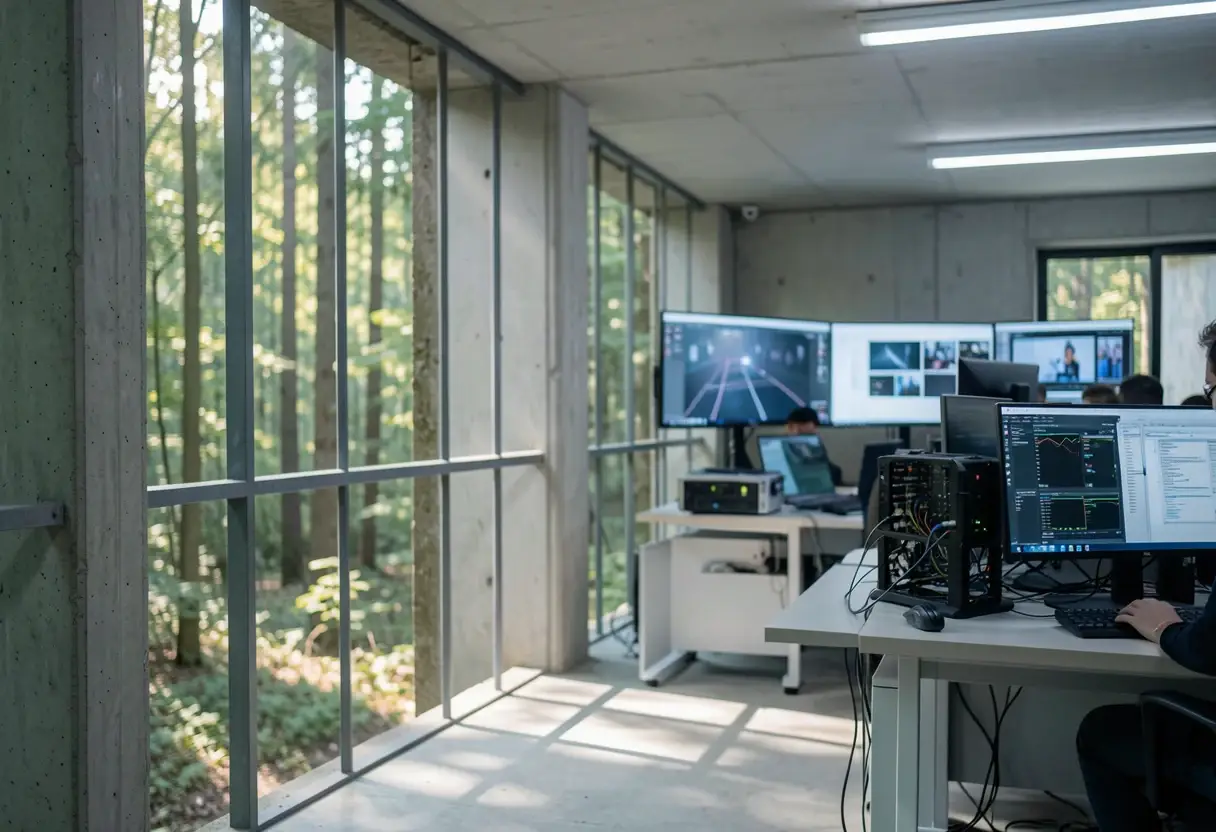
Windows in the prison kept trees and grass visible beyond institutional walls, allowing exterior and interior to share a frame. Cells below ground demanded a different strategy: production designer Judy Rhee and Franco built them on a stage so the crew could control every surface.
Rhee and Franco selected the cement, then tested multiple textures and tones. Franco said: “We did many tests with different textures and different tones to it.” Their aim combined realism with a workable camera setup, including angle, color and surface texture.
A light well sold time underground
The stage cells sat underground, creating a near-lightless set and making the passage of time difficult to convey. A small light well, a narrow vertical opening, admitted a shaft of sunlight that changed the room’s atmosphere and established the passage of time.
That solution supported the deliberately austere look. Franco said the format avoided extensive lighting, particularly after his work on period pieces and fantasy projects.
He sought a contemporary, grounded and occasionally imperfect series rather than the polished visual register associated with those earlier assignments. For Franco, the camera could observe deterioration, confinement and the killer’s physical presence without manufacturing visual polish.
What does this change for crews lighting dark interiors?
For Franco’s crew, the practical lesson was to combine a controlled daylight shaft, practical fixtures and tested surfaces instead of flooding the set with light. A practical fixture, in set terms, is a visible source within the scene. The approach let lighting establish time and space while preserving deliberate darkness.
Franco also rejected the familiar beauty lighting, or soft, flattering illumination, that he often used on period and fantasy work. He wanted less lush images that built character rather than followed a preset, visually pleasing recipe.
Actors met close framing without technical distraction
Franco had photographed Graham on Boardwalk Empire, where the actor portrayed Al Capone. He cited Graham’s ability to disappear into a character as a major asset, particularly for a role defined by manipulation and physical menace.
The restraint did not eliminate memorable lighting. Graham’s physique received what Franco described as gorgeous lighting in a shower scene, while the prison environment directed attention toward performance, texture and spatial detail.
For Schreiber’s performance as a man increasingly destroyed by the case, Franco moved the camera extremely close without softening what it found. Schreiber knew where the camera and lens were, Franco said, but remained inside the character and ignored technical distractions.
Preparation met execution on the Pittsburgh production
Nocturne gave Franco room to organize its look and concept rather than follow prescribed lighting and camera positions. He found that intellectual work engaging and said he would rather remain in the planning phase.
Franco contrasted preparation with execution, calling the latter the grunt work after planning with the strongest possible actor, crew, lights and equipment. He also described the abrupt shift from fighting for a job to confronting the obligation to do it.
Franco judged the on-set execution as skillful as the intellectual planning. His team carried a controlled visual concept from Pittsburgh exteriors through prison windows, stage-built cells and one narrow shaft of sunlight.
via Google News · Cinematography (Source)
More from Grace Kim
Show full bio
News editor covering money, funding and market shifts around Filmmaking News is the working trade daily for at Filmmaking News.
179 articles
Further readings
- The Only One Previews at Soho Horror Fest: A Slasher Built on RejectionNovember 23, 2026
- Framestore Breaks Down Turn-of-the-Century California Builds for 'East of Eden'November 20, 2026
- Demonetize Review: Found Footage Horror Loses Its Own GameNovember 27, 2026
- Erie Trades Found-Footage Chills for a Flat Final ActNovember 22, 2026
- Nicolas Cage's 'Best Pancakes in the County' Serves Tarantino Imitation, Rarely the Real ThingNovember 22, 2026