Awards season · Directing & Cinematography
Sony FX9 and Clavius primes carry von Einsiedel's fourth film
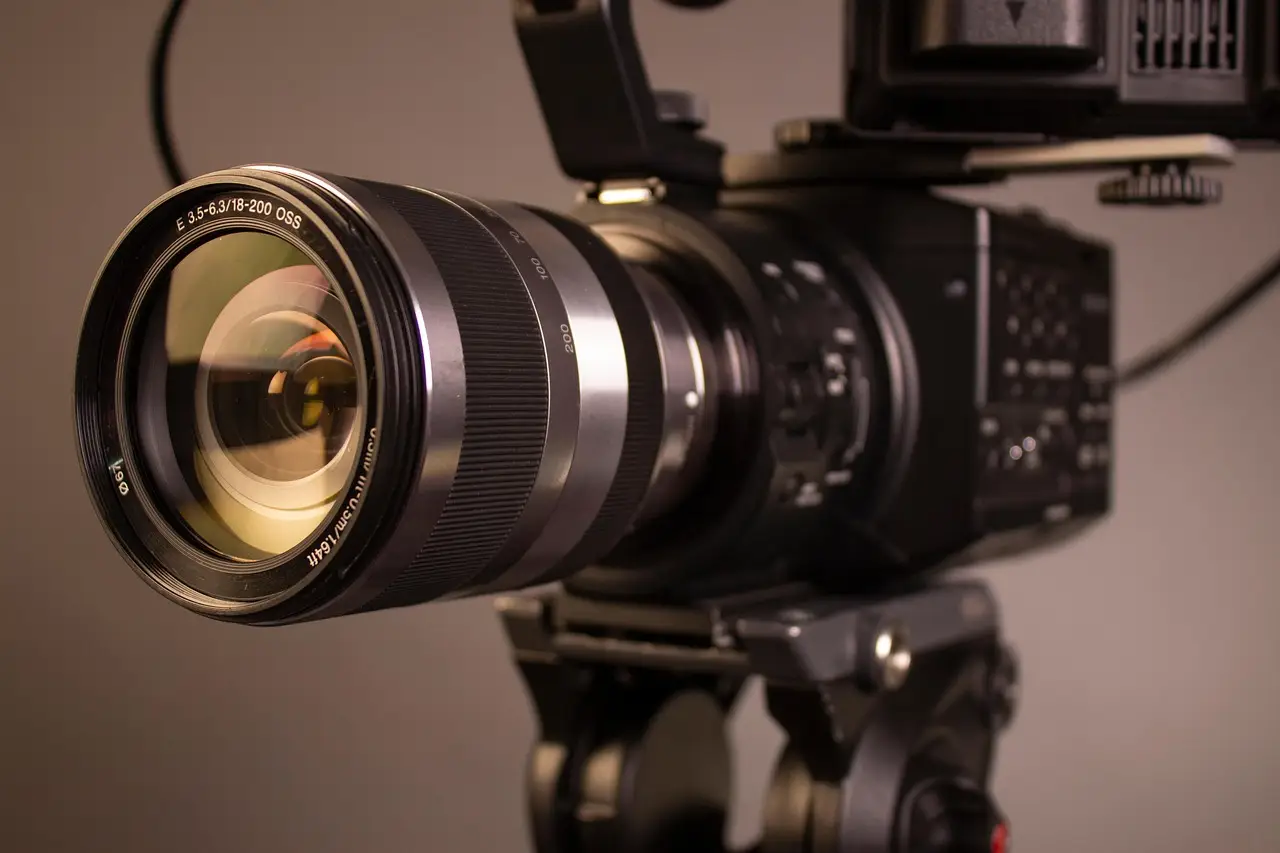
Franklin Dow shot von Einsiedel's fourth feature on a Sony FX9 with Clavius primes, 16mm Bolex inserts and single-camera takes up to two hours — on a documentary budget.
Production notes
- The Cycle of Love is the fourth feature Dow and von Einsiedel have shot together over a partnership of almost 20 years.
- All unscripted interactions ran on a single camera in continuous takes lasting up to two hours, with no two-camera set-ups and no repeated coverage for a reverse angle.
- Dow shot on a Sony FX9 with Clavius primes adapted from a 58mm Helios-44, covering 28mm, 38mm, 58mm and 88mm.
- The five-person crew ran a 16mm Bolex with Kodachrome and Double-X stock for childhood flashbacks and Lotta's travel inserts.
- Colourist Alex Chernoff and online artist Stef Henley added grain, de-sharpening, dust, scratches, flicker, weave and optical-title judder; present-day interviews used Zeiss zooms without diffusion.
Franklin Dow shot The Cycle of Love on a single Sony FX9, with unscripted scenes running as long as two hours.
That film is the fourth feature Dow and director Orlando von Einsiedel have made together across a partnership of almost 20 years that also produced a run of shorts and a television series. The approach grew out of Evelyn (2018), where Dow built a backpack-mounted camera to record whole family conversations while hiking across the UK countryside.
How do you rebuild the 1970s on a documentary budget?
On their first conversation about the project, von Einsiedel said he intended to recreate PK's journey from India to Sweden, driven by the fact that, apart from a handful of letters, no archive of the journey really exists. Dow's first thought: "how the hell are we going to do that on a documentary budget!?"
They could not build large sets or dress big wide shots to sell as the 1970s, so they reached for archive footage. That covered wide shots in the correct period, expanding the view beyond the close and medium shots they could dress as the '70s, and gave them an authentic look and feel plus a visual anchor for the live work.
PK's conversations with the people he meets along the way run unscripted, as do the scenes between PK and Lotta. Everything ran on one camera in long continuous takes lasting up to two hours, giving the non-actors time to relax and forget the camera.
There are no two-camera set-ups, and they never repeated a scene for a reverse angle, as in a normal drama. The train scene with German border guards was the exception, and it always made von Einsiedel and Dow nervous.
Why a Sony FX9 instead of Venice or ARRI?
Dow chose a Sony FX9. The balance of image quality, sensitivity, weight and power consumption made it the best tool for very long takes with non-actors and a crew that needed the smallest possible footprint.
He said: "I love the Sony Venice and ARRI's cameras but they would have severely hampered my ability to shoot handheld freely without something like an Easyrig and I wanted to keep the camera as invisible as possible."
The wider rule he applies: "I am very much of the belief that you should use the right tool for the job and that practicality matters." Outside large commercial or drama shoots, a camera that is too unwieldy, cannot run long on a battery, or drains its magazine too quickly can adversely affect the work.
Who was on the crew?
- Franklin Dow — cinematographer
- Juan Minotta — 1st AC
- Ana Kirkljus — gaffer
- Holly Smyth — 2nd AC / B cam op
- Durjay Soni — 2nd AC
Which glass for the period look?
Dow used a set of prime lenses called Clavius, re-housed and optically adapted from the old Russian 58mm Helios-44 stills lens. The set covers four focal lengths: 28mm, 38mm, 58mm and 88mm.
He rates them for warmth, edge fall-off that gives a vintage feel while staying sharp in the centre, and flares and defocus that behave well. All of the 1970s footage ran through Tiffen Double Fog filters. During testing, von Einsiedel said, "Oh wow, that suddenly looks like film!"
Where does 16mm still fit?
Dow carried a 16mm Bolex and a few rolls of Kodachrome (colour) and Double-X (black and white) film for two jobs: shots of PK's childhood, visually distinct in black and white from the rest of the film, and small moments that felt as if Lotta had shot them on her travels. Holly Smyth, the second AC and B cam operator, shot that second batch.
Dow's reason for keeping film in the kit: "There is nothing like having a hard reference that you have shot yourself."
Who plays PK and Lotta?
Young PK and Lotta are the only scripted roles, played by Chirag Lobo and Mina Dala. Almost everyone else in the film is street-cast non-actors or people the crew simply met along the way, the direct inheritance of Evelyn's conversations with strangers. Dow credits that sourcing for much of the film's authenticity and for why so many people connect with it.
How do digital and archive meet in the grade?
Camera, lenses and filters carry a modern-digital-versus-archive look only so far. Dow worked with colourist Alex Chernoff and online artist Stef Henley — the pair he calls "Bert and Ernie" because they work together more closely than any post-production team he has encountered — to create the synergy.
Their toolbox: colour, film grain, de-sharpening, dust and scratches, flicker and weave (the erroneous movement of film in the gate) in varying degrees, plus mimicked judder of optical titles to sell the illusion.
Why do the present-day interviews work?
Two interviews carry the present-day perspective, looking back on the story. Dow shot them on modern Zeiss zoom lenses without diffusion filters for a clean contemporary feel, so the cut from interview to 1970s lands as a visual reset and throws the audience back in time.
The calibration behind that effect matters too. The eye constantly normalises what sits in front of it, so grading (timing) suites keep an evenly lit grey wall behind the screens. Dow calls it a consistent reference, like a white balance for your eyes; without it, grades tend to get progressively stronger as the eyes adjust.
What was the aim?
Dow set out to draw on both the emotional power of documentary and the artistic craft of drama in a story that took place 50 years ago. He calls the moment interesting because the lines between fiction and non-fiction filmmaking are blurring, and he has always let documentary, commercial and fiction work bleed into one another and share techniques.
via Google News · Cinematography (Source)
More from Sophie Lindqvist
Show full bio
Market editor covering regulation, policy and their impact on Filmmaking News is the working trade daily for at Filmmaking News.
191 articles
Further readings
- Neon’s ‘Once Upon a Time in Harlem’ Frames 52-Year footage as ResistanceNovember 23, 2026
- ShotDeck Rebuilt: Semantic Search, Movie and TV Clips Join LibraryNovember 20, 2026
- 'Primetime' Assigns Four Camera Formats to Fact, Fiction and DelusionNovember 20, 2026
- 'Backrooms' Built 100,000 Sq Ft of Digital Sets in Blender on Under $10MNovember 22, 2026
- Cliff Booth AI Backlash Meets Fincher's Record: He Fixed Se7en's Negative With ItNovember 23, 2026